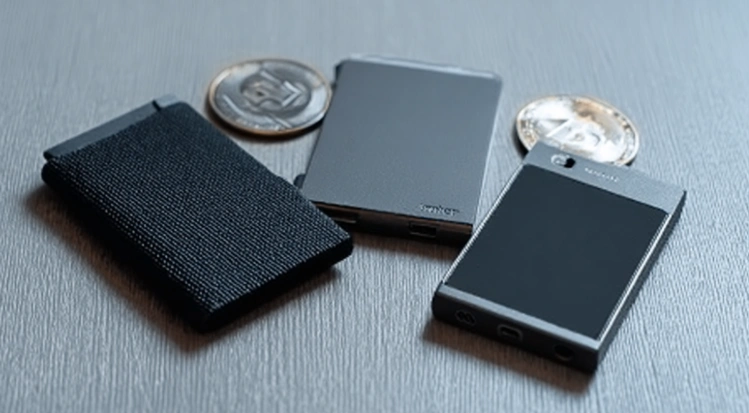
Ledger Cold Wallet vs Other Hardware Wallets comparison examines how different hardware approaches to cryptocurrency security compare in protection level, usability, and ecosystem support. The hardware wallet market includes multiple vendors with varying architectural choices, feature sets, and price points. Understanding these differences enables informed selection among hardware options that all dramatically exceed software wallet security.
Ledger Cold Wallet Hardware Comparison covers major competitors including Trezor, KeepKey, SafePal, and others. Each manufacturer makes different trade-offs between cost, features, and security architecture. While all hardware wallets provide substantial improvement over software solutions, meaningful differences exist that may influence selection based on individual priorities. This page provides objective comparison across key factors for users evaluating cold storage options for all supported coins.
Comparing Ledger Cold Wallet with Other Hardware Wallets
Ledger cold wallet hardware comparison requires examining both security architecture and practical usability factors. Security differences stem primarily from chip architecture choices, particularly whether devices use certified secure elements or general-purpose microcontrollers. Usability differences include display quality, navigation methods, and companion software capabilities.
Fair comparison acknowledges that all hardware wallets provide strong security compared to software alternatives. Differences between hardware wallet brands, while meaningful, are smaller than the gap between any hardware wallet and software wallets.
Key Differences in Security and Usability
| Factor | Ledger | Trezor | SafePal | KeepKey |
|---|---|---|---|---|
| Security chip | CC EAL5+ secure element | General microcontroller | Secure element | General microcontroller |
| Display | OLED/E-ink (model varies) | OLED/Color LCD | Color touchscreen | Large OLED |
| Connectivity | USB-C, Bluetooth (select) | USB-C, USB-A | QR code, USB | USB |
| Supported coins | 5,500+ | 1,800+ | 30,000+ | 7,200+ |
| Price range | $79-$399 | $69-$249 | $49-$189 | $49 |
| Open source | Partial (apps) | Full | Partial | Full |
Each manufacturer prioritizes different factors. Ledger emphasizes certified security hardware while Trezor prioritizes open source transparency. Selection depends on individual priority weighting.
Technical Architecture Comparison
Ledger cold wallet vs other hardware wallets architectural differences center on the security chip debate between certified secure elements and general-purpose microcontrollers. Secure elements provide hardware-level protections including tamper resistance, side-channel attack countermeasures, and certified evaluation. Microcontroller designs rely more heavily on software security measures.
Architectural choices affect both security properties and practical trade-offs. Secure elements provide stronger guarantees but may limit open source verification. Microcontrollers enable full code transparency but face different attack categories.
Secure Element vs Microcontroller Designs
- Secure element (Ledger): CC EAL5+ certified, tamper-resistant, banking-grade
- Microcontroller (Trezor): Open source firmware, community auditable
- Secure element (SafePal): EAL5+ chip, air-gapped option available
- Microcontroller (KeepKey): Large display focus, ShapeShift integration
- Side-channel protection: Secure elements include hardware countermeasures
- Physical attacks: Secure elements resist decapping and probing
- Firmware security: Both approaches use cryptographic signing
- Key isolation: Both architectures isolate private keys from hosts
Both architectures provide substantial crypto security improvement over software wallets. The choice involves trade-offs rather than clear superiority via USB-C connection.
Feature and Ecosystem Comparison
Ledger cold wallet vs other hardware wallets extends beyond security to encompass features, ecosystem, and support infrastructure. Companion software quality, integration availability, and ongoing development investment all affect user experience. These factors may matter as much as security architecture for many users.
Ecosystem considerations include third-party integrations, DeFi compatibility, and community support resources. Strong ecosystems enhance hardware wallet utility beyond basic storage functionality.
Supported Coins and Integrations
- Ledger: 5,500+ supported coins, Ledger Live software, extensive DeFi integrations, Bluetooth models available
- Trezor: 1,800+ coins, Trezor Suite software, strong privacy focus, Tor support
- SafePal: 30,000+ coins (many via DEX), mobile-first approach, affordable entry
- KeepKey: 7,200+ coins, ShapeShift integration, larger display
Third-party wallet support varies by device and blockchain. NFT support increasingly available across platforms. Staking integration expanding across ecosystem. Ecosystem strength affects practical utility for different cryptocurrency activities across cold wallet platforms.
For hot wallet comparison, see our Ledger Cold Wallet vs Hot Wallet guide. For software wallet comparison, visit Ledger Cold Wallet vs Software Wallet. For decision guidance, see Choose Ledger Cold Wallet.
Frequently Asked Questions
Ledger uses certified secure elements while Trezor uses general microcontrollers. Secure elements provide hardware-level protections. However, both significantly exceed software wallet security.
Secure elements provide stronger hardware protection but limit code transparency. Microcontrollers enable fully open source firmware. Each approach involves trade-offs.
SafePal claims 30,000+ coins through DEX integration. For native support, KeepKey and Ledger offer the most extensive coverage of major cryptocurrencies via USB-C or Bluetooth.
Open source provides transparency and community auditing benefits. Closed source with certified security provides different assurance types. Prioritize based on your trust model.
Not necessarily. Price differences often reflect features, materials, and display quality rather than security fundamentals. Entry-level hardware wallets still dramatically exceed software security.
Yes. Standard recovery phrase compatibility (BIP-39) allows restoring wallets across compatible brands. Many users maintain devices from different manufacturers.
All major hardware wallets support beginners through guided setup. Ledger and Trezor offer the most extensive documentation and support resources for new users.